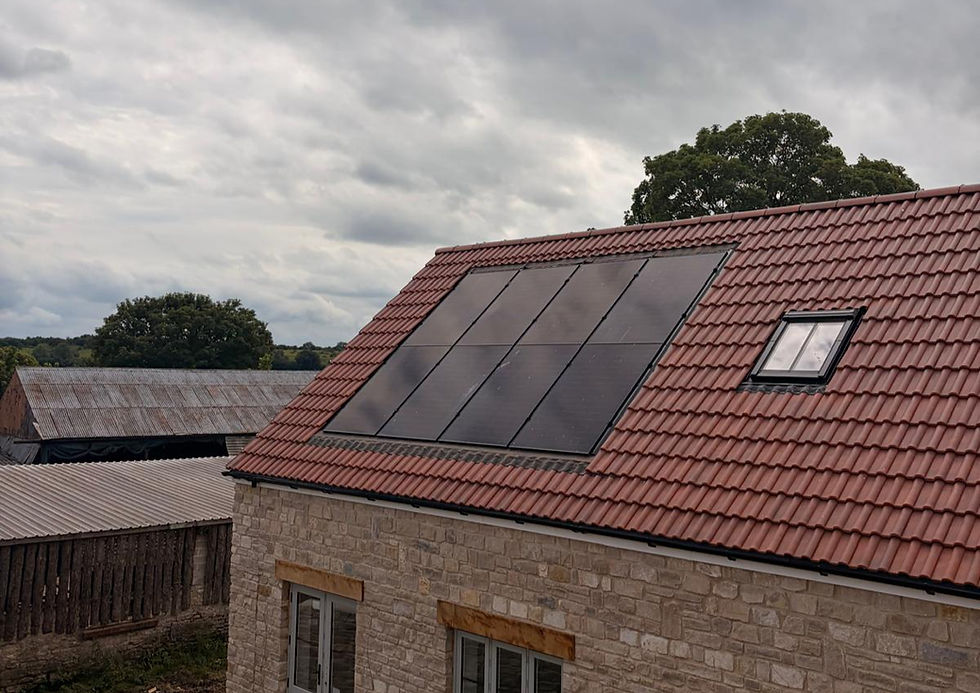
Solar Panels in Bristol (2026): Costs, Savings and What Homeowners Need to Know


Solar panels are no longer a future technology.
Across Bristol, more homeowners are installing solar to reduce energy bills, increase independence from the grid, and take control of how their homes use electricity.
But one question still comes up more than any other:
Are solar panels actually worth it in 2026?
The answer depends on how your system is designed, how your home uses energy, and what you expect from it.
Because while solar can significantly reduce electricity costs, the biggest gains come from how that energy is used, not just how much is generated.
So what does that actually mean for your home?
What do solar panels cost in 2026, what can you realistically save, and are they even worth it for a property in Bristol?
How Much Do Solar Panels Cost in Bristol in 2026?
One of the first things most homeowners want to understand is cost.
In Bristol, the price of a solar PV system depends on several factors, including roof size, system design, and whether battery storage is included.
As a general guide:
A typical 3-4 kW system: £4,500 - £6,500
A larger 5-6kW system: £5,000 - £9,000
Both depend on access, specification, layout and roof type
Battery storage (optional): £3,000 - £8,000+ depending on size and specification
These figures are not a fixed or guaranteed price; they are just a rough guide.
But there's an important reason more systems sit at the higher end of that range.
Today's installations include far more than panels on a roof. A well-specified system now typically incorporates a hybrid inverter, a battery storage unit, and an AI-optimised energy management controller – the technology that determines when your home stores energy, when it uses it, and how it interacts with the grid.
That additional kit costs more upfront. But it's also what makes the financial case for solar significantly stronger than it was even three years ago.
The value of a solar system isn’t in the panels themselves. It's in how intelligently the whole system is managed.
Why 2026 Is a Different Conversation
To understand why solar makes sense now, it helps to understand what's happened to energy pricing.
UK household electricity bills are ultimately driven by wholesale energy costs – the price at which energy is bought and sold on the open market. And that market has been anything but stable.
Over the past few years, wholesale prices have surged, corrected, and surged again – driven by global events, supply disruption, and structural changes in how the grid generates electricity. Each time wholesale prices spike, retail bills follow.
The problem for homeowners is that there is no sign that this volatility is going away.
Solar, paired with battery storage, is one of the most effective ways to get ahead of that exposure.
When you generate and store your own electricity, you are removing a portion of your energy use from the wholesale market entirely. You're not insulated from every price movement, but you are significantly less exposed to them than a home that relies entirely on the grid.
And as fuel costs continue to rise, the energy you generate yourself becomes more valuable, not less.
What Can You Actually Save? The Role of AI-Optimised Control
The amount you save with solar panels isn't just about how much electricity they generate.
It's about how much of that energy you actually use.
In a typical home without battery storage, a large portion of solar generation is exported to the grid during the day – often at a lower rate than the cost of buying electricity back later. That limits the overall financial benefit.
This is where AI-optimised energy management changes the picture.
Modern solar systems don't just generate electricity – they make decisions. An AI control system monitors your home's energy use in real time and tracks electricity tariff rates throughout the day, forecasts solar generation based on weather data, and decides automatically when to store energy, when to use it, and when to draw from or export to the grid.
In practical terms, the means:
Solar energy generated during the day is stored rather than exported, and used during evening peak hours when electricity is most expensive
The system responds to variable tariffs - charging the battery from the grid overnight at cheaper off-peak rates where it's beneficial.
Energy use across the home is coordinated – so your hot water, EV charger, and battery work together rather than independently
This shifts solar from being a passive system (panels on a roof that happen to generate electricity) to an active part of how your home manages and protects against energy costs.
And in the context of rising fuel costs and long-term uncertainty in the wholesale energy pricing, active management becomes more valuable over time.
Because you're not just reducing your reliance on the grid. You're reducing your exposure to how unpredictable that grid can be.
What About the Smart Export Guarantee?
Any solar energy you don't use – and don’t store – can still earn you money.
Under the Smart Export Guarantee (SEG), energy suppliers are required to pay you for excess electricity exported to the grid. Rates vary by supplier, but it means generation that would otherwise go to waste still has a value.
It's not a replacement for self-consumption. Using or storing your own energy will almost deliver a better return than exporting it. But it does mean that nothing generated is ever truly wasted – and it's worth checking when you compare energy tariffs.
Does My Roof Work for Solar in Bristol?
Bristol's climate is often misunderstood when it comes to solar.
Yes, we have grey days. But solar panels generate electricity from daylight, not just direct sunlight. Bristol receives enough annual irradiance to make solar a viable and worthwhile investment for the majority of properties.
The key variables are:
Roof orientation – south-facing is ideal, but southeast and southwest perform well too
Roof pitch – most standard pitches generate efficiently
Shading – trees, chimneys, and neighbouring buildings can reduce output, which is why proper system design matters.
Available roof area – this determines system size and, in turn, generation potential.
This is why a site survey is an essential first step. There's no point working from averages when your property has its own specific characteristics.
The right system isn't the largest one. It’s the one designed around how your home actually uses energy.
Do You Need Planning Permission for Solar Panels in Bristol?
In most cases, no.
Solar panels are classed as permitted development for the majority of residential properties, meaning no planning application is required.
However, if you live in a listed building or a designated conservation area, you may need to check with Bristol City Council before proceeding.
Our team handles all relevant notifications, including Distribution Network Operator (DNO) registration, as standard. It's one less thing to worry about.
So, Are Solar Panels Worth It in Bristol in 2026?
For most homeowners: yes.
Energy bills aren't going to fall significantly on their own. Wholesale prices remain volatile, and the direction of travel on fuel costs is clear. The technology available in 2026 – from high-efficiency panels to AI-managed battery systems – means solar can do far more than it could even a few years ago.
The additional costs of a well-specified system, including AI-optimised control and battery storage, is real. But so is the return. Not just in reduced bills today, but in the long-term protection it gives you against the energy market.
A well-designed system, built around your property and how you use your energy, can meaningfully reduce what you spend – and reduce your exposure to what the grid does next.
A poorly designed one will underperform. That’s why design and system specification matter more than any single component.
Thinking About Solar Panels in Bristol?
At Green Flare, every solar installation begins with a detailed site survey and a system design built around your property – not a template.
With over 15 years of experience installing solar across Bristol and the surrounding area, we know what works and what doesn't.
Are you thinking about solar panels? Get in touch with our team, we're always happy to talk – no pressure, no jargon, just honest advice.