What Should You Upgrade First: Solar, Battery or Heat Pump?


Most homeowners don't upgrade their entire energy system in one go.
Budgets are finite. Priorities shift. And most people start with one question: which one do I do first?
It's a fair question, but it's also the wrong one to start with.
Because the "right" order isn't the same for every home. It depends on how you use energy, what your current heating system looks like, and what you're actually trying to solve - lower bills, more independence, backup power, or all three.
Why the Order Matters
Solar, battery storage and heat pumps aren't separate purchases. They're parts of the same system.
Install them in the wrong order, or without thinking about how they'll interact, and you can end up paying twice - once for the initial installation, and again later when a battery has to be resized or a heat pump has to be re-commissioned to work properly alongside solar.
This is the core problem with treating renewable technology as a shopping list. The better approach is to think about your whole-house energy system first, then work out which piece to install first based on your specific home and goals.
If Your Priority Is Lower Bills: Start With Solar
For most homes, solar panels are the natural first step.
They generate the electricity that everything else in the system will eventually use, store, or manage. Installing solar first also means any heat pump or battery system that comes later can be sized and specified around your actual generation, rather than guessed at in advance.
Solar tends to make the most sense first if:
Your roof gets good sun exposure and hasn't been assessed yet
You want to start reducing your reliance on grid electricity as soon as possible
You're not in a rush to replace your current heating system
One thing worth knowing: solar on its own has limits. Without a battery, much of the electricity your panels generate during the day gets exported to the grid rather than used in your home, often at a lower rate than you'd pay to buy it back later in the evening. That doesn't mean solar isn't worth doing first it just means the real financial benefit often comes once storage is added.
If Your Priority Is Energy Independence: Battery Might Come Next
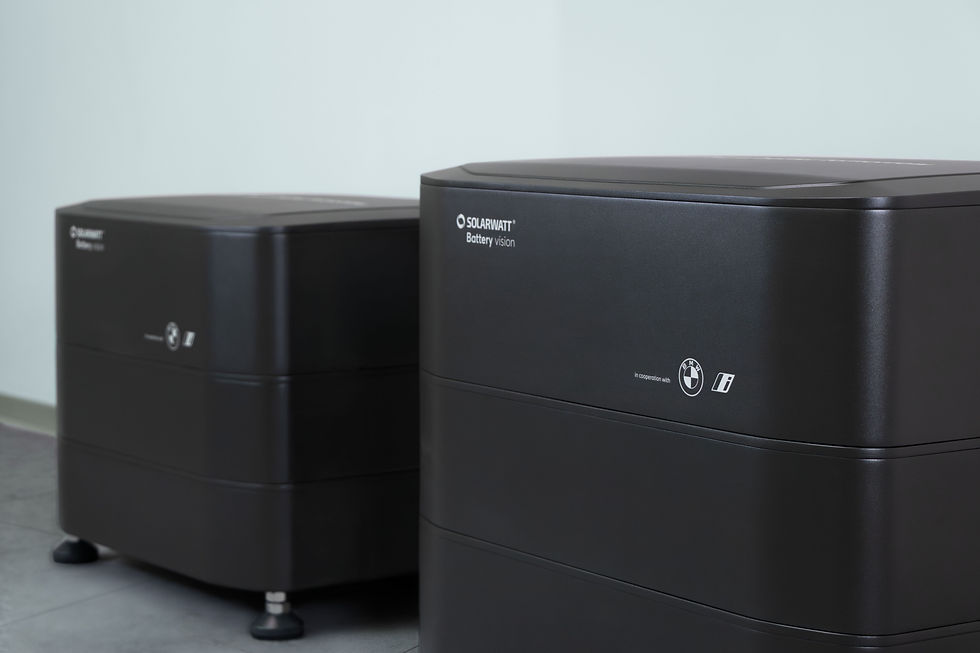
Once solar is in place, or if you already have solar and are looking at your next step, battery storage is usually the upgrade that unlocks the most value.
A battery lets you store the electricity your panels generate during the day and use it in the evening, when demand and the cost of buying electricity from the grid is typically higher.
But battery storage does something else that's easy to overlook: with the right home energy gateway, it can also keep parts of your home running during a power cut.
A home energy gateway - the control unit that sits between your solar, battery and your home's electrics can be configured to isolate your battery from the grid during an outage and continue supplying power to key circuits in your home. That might mean lighting, your fridge and freezer, or your internet router staying on, even when the street around you has no power.
This is worth factoring in if you live somewhere with a history of power cuts, or if backup power for essentials is important to you and your household, not just bill savings. It's a genuinely different reason to prioritise a battery, separate from the financial case, and one we increasingly hear from homeowners once they understand it's possible.
Battery storage tends to make sense as a next step if:
You already have solar and want to use more of what you generate
You're on, or considering, a time-of-use electricity tariff
Backup power during outages matters to your household
If Your Priority Is Replacing an Old Heating System: Heat Pump First Might Make Sense
Sometimes the decision isn't really about sequencing at all; it's about timing.
If your gas boiler is old, unreliable, or nearing the end of its life, waiting for solar or battery to come first isn't always practical. In that case, a heat pump can be the right place to start, particularly with support currently available through the Boiler Upgrade Scheme.
A heat pump installed on its own will still work well. But a heat pump designed with future solar and battery integration in mind - even if those come later - avoids costly rework further down the line. This is where a heat loss calculation and proper system design at the outset really pay off, because they mean your heating system is ready to work alongside solar and battery storage whenever you decide to add them.
Heat pumps tend to make sense as a starting point if:
Your current heating system needs replacing soon regardless of other plans
You want to reduce reliance on gas as a first step
You're planning renovation work that makes now a practical time to install
There's No Universal Answer, But There Is a Right Question
The honest answer to "solar, battery or heat pump first?" is: it depends on your home, your current setup, and what you're trying to achieve.
What matters more than the order is that each step is designed with the next one in mind. A solar system sized without any thought to a future battery. A heat pump installed without considering how it'll interact with solar generation down the line. A battery chosen without asking whether backup power during outages matters to you. Each of these is a missed opportunity to make your whole-house system work harder for you.
This is why we start every project with a conversation about your home and your priorities, not a product list. Whether you're beginning with solar, a heat pump, or want to understand whether battery storage and a home energy gateway could give you backup power during outages, we'll help you work out the right first step - and the right order after that.
At Green Flare, we don't believe in a one-size-fits-all upgrade path. Every home is different, and the right first step - solar, battery or heat pump - depends on how you live, what your current system looks like, and what you're trying to achieve.