Choosing a Heat Pump Installer: What Actually Matters


Switching to a heat pump from a conventional gas or oil boiler is a big decision to make! Homeowners usually have the same handful of questions: Will it keep the house warm? Will my water be hot enough? What will it cost to run? How disruptive is installation? And how do you know it's been designed properly in the first place?
Those questions are reasonable - and in most cases, they're not really about the technology. They're about the installer.
A Heat Pump Isn't a Like-for-Like Boiler Swap
Heat pumps run efficiently at lower flow temperatures than a gas boiler. They also have a lower power output, which means the system design matters far more than it would for a straight boiler replacement, as there is a smaller margin for design error.
Before any installation, a proper installer should carry out a full heat loss calculation & then assess:
The size, layout and insulation standard of the property
Existing radiators and/or underfloor heating, and whether they need upgrading
Hot water requirements and pipework
Heating controls and how the home is actually used, day to day, by the occupier
Skip these steps and you get one of two outcomes: an undersized system that struggles in winter, or an oversized one that never runs efficiently. Either way, the homeowner pays for it in comfort or in running costs.
Why MCS Certification Is the First Filter
MCS certification confirms an installer has been assessed against recognised standards for renewable heating design, installation and commissioning. It's not a badge for fitting a product - it's evidence of a proper process behind the fitting.
It also matters practically: MCS certification is required to access government funding and incentives, including the Boiler Upgrade Scheme.
Green Flare has held MCS accreditation since 2010.
Experience Shows Up in the Details, Not the Quote
The cheapest quote and the best long-term outcome are rarely the same thing. An experienced installer will spot design problems before they become expensive ones, and will look at the whole heating system - radiators, hot water cylinders, controls - rather than just the outdoor unit.
They should also be able to talk credibly about how a heat pump fits alongside other upgrades a homeowner might be considering, such as solar PV or battery storage for running costs, or underfloor heating for comfort at lower flow temperatures. These aren't separate decisions, they're part of the same energy plan for the property.
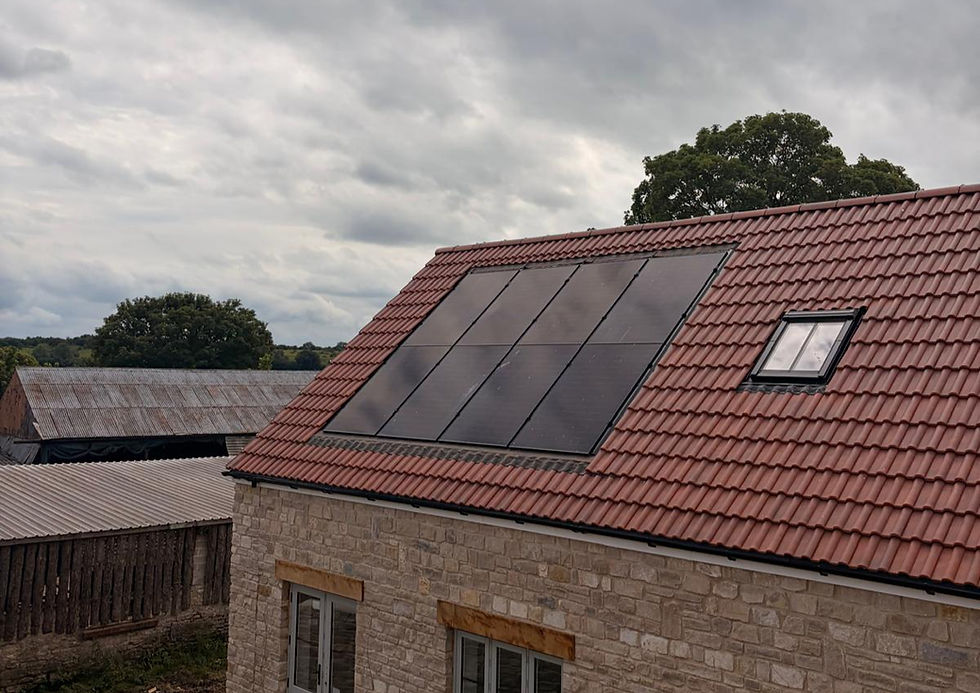
Take our Somerset House project in Wells. The client wanted to move away from gas boilers that were heating the house, hot water and a swimming pool - a much bigger and more consistent demand than a typical home. We designed a system around two Stiebel Eltron air source heat pumps, paired with new solar PV and battery storage to help offset running costs. The client's own solar payback estimate came out at three to four years, and their new panels are producing around five times more than the 15-year-old system they replaced.
That's the difference proper design makes: the heat pump wasn't specified in isolation. It was sized around the property's real heating and hot water demand, then supported by the right generation and storage to make it cost-effective to run.
What to Ask Before You Choose an Installer
Are they MCS certified?
Do they carry out a full heat loss calculation, not just a survey?
How long have they been installing renewable heating systems?
Can they explain the design in plain terms - not just quote a price?
Will they advise on radiators, underfloor heating and hot water, or only the heat pump itself?
Do they support the system after installation, once you're living with it day to day?
If an installer can't answer these clearly, that's the answer.
Confidence Comes From the Design, Not the Sales Pitch
A heat pump can be an excellent long-term heating solution, but only when it's specified properly for the property, installed to a recognised standard, and supported afterwards. That's a design problem before it's a sales conversation.
At Green Flare, that's the order we work in: assess the property, design the system, then talk about the installation.
Thinking about a heat pump for your home? Get in touch with Green Flare for a property assessment and find out whether your home is suitable, and what a properly designed system would look like.