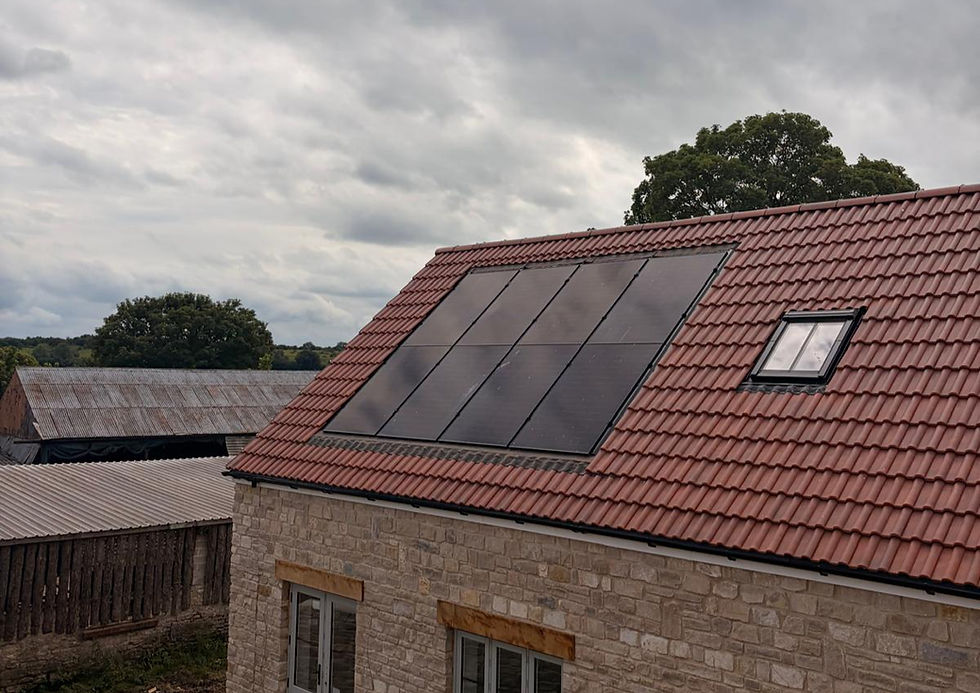
Why Solar Panels Continue to Deliver Strong Returns for UK Homeowners in 2026


With energy prices remaining unpredictable and sustainability continuing to shape home improvement decisions, many UK homeowners are asking the same question: are solar panels still worth it in 2026?
For most households, the answer is yes. Advances in solar technology, rising electricity costs and more efficient battery storage systems mean solar energy can deliver meaningful long-term savings while reducing reliance on the grid. Combined with Smart Export Guarantee payments and improving installation efficiency, solar panels remain one of the most practical renewable energy investments for UK properties.
However, the financial return depends on several factors, including system size, household energy usage, roof suitability and whether battery storage is included. Understanding these variables helps homeowners make informed decisions about whether solar is the right fit for their property.
Are Solar Panels Still Worth It in 2026?
Solar panels continue to offer strong long-term value for UK homeowners in 2026, particularly for households with moderate to high electricity usage. Although the upfront investment can still feel significant, improvements in panel efficiency and increasing electricity prices have strengthened the financial case for solar.
The average UK household now pays considerably more for electricity than it did five years ago. Even with periods of market stabilisation, long-term forecasts suggest grid electricity prices are likely to remain elevated compared with historical averages. Generating electricity on-site allows homeowners to reduce dependence on suppliers while gaining greater control over future energy costs.
Modern solar systems are also more effective in UK weather conditions than many people realise. Solar panels do not require constant sunshine to generate electricity. They continue producing power during cloudy days, making them a viable option across most regions of the UK.
For many homeowners, the value of solar extends beyond simple bill savings. Installing renewable energy systems can improve a property's sustainability credentials, reduce carbon emissions and potentially increase property appeal for environmentally conscious buyers.
Average Solar Panel Costs in the UK
The cost of a solar panel installation in 2026 depends on system size, panel quality, roof complexity and whether battery storage is included. While pricing varies between properties, the average costs for residential systems are broadly as follows:
3kW system: Typically between £5,000 and £7,000, suitable for smaller households with lower energy usage.
4kW system: Usually between £6,000 and £8,500, often considered the most common choice for average family homes.
6kW system: Generally between £8,500 and £11,500, better suited to larger households or homes with higher daytime energy consumption.
Battery storage addition: Commonly adds between £2,500 and £7,000 depending on storage capacity and technology.
Although lower-cost systems are available on the market, installation quality and system design remain critical factors in long-term performance. A poorly designed system may generate lower output, reduce efficiency and extend the payback period.
Working with an experienced renewable energy specialist such as Green Flare allows homeowners to receive tailored recommendations based on roof layout, energy consumption patterns and future electricity needs. Bespoke system design can significantly improve long-term return on investment compared with off-the-shelf installations.
How Much Can You Save on Energy Bills?
Energy bill savings vary depending on how much electricity a household consumes and how effectively solar generation is used throughout the day. In general, UK homeowners with solar panels can reduce electricity bills by hundreds of pounds per year.
Typical annual savings in 2026 may include:
Small households: Around £300 to £500 per year.
Average family homes: Around £500 to £900 per year.
Higher-usage households: Potentially £1,000 or more annually when combined with battery storage and smart energy management.
The key factor is self-consumption. Electricity used directly within the home delivers the greatest financial benefit because it offsets expensive grid electricity purchases. Homes that consume more energy during daylight hours often see faster returns.
Battery storage can further increase savings by storing unused solar electricity for evening use. This reduces the need to import electricity after sunset when household demand is often highest.
As electricity prices continue to rise over time, annual savings may also increase. Unlike many home improvements, solar panels can become more financially valuable as energy costs climb.
Understanding SEG Payments
The Smart Export Guarantee, commonly known as SEG, allows homeowners to earn money by exporting unused solar electricity back to the grid.
Energy suppliers participating in the scheme pay households for excess electricity generated by their solar panels. Rates vary between suppliers, with some offering fixed tariffs and others providing flexible export rates linked to wholesale electricity prices.
Typical SEG earnings in 2026 may range from around £80 to £350 per year depending on:
System size: Larger systems typically export more surplus electricity.
Household energy habits: Homes that use less electricity during the day generally export more.
Battery storage usage: Batteries may reduce exports because more energy is stored for later use.
SEG tariff rates: Supplier rates can differ significantly.
While SEG payments alone are unlikely to repay the system quickly, they contribute to the overall financial return and improve long-term value.
Choosing the right tariff is important. Some suppliers offer considerably better export rates than others and professional guidance can help homeowners maximise returns from both self-consumption and exported energy.
Typical Payback Periods Explained
The payback period refers to the amount of time it takes for energy bill savings and SEG earnings to recover the initial installation cost.
In 2026, most residential solar systems in the UK achieve payback within approximately 7 to 12 years, depending on the property and system configuration.
Estimated payback periods often look like this:
Smaller systems without batteries: Around 8 to 12 years.
Average 4kW systems: Often between 7 and 10 years.
Systems with battery storage: Typically 9 to 14 years due to higher upfront costs.
High-consumption households: Sometimes faster than 7 years where daytime energy use is high.
Since most modern solar panels are expected to last 25 to 30 years or more, homeowners can potentially benefit from decades of reduced electricity costs after reaching payback.
It is also important to consider that payback calculations are based on current electricity pricing assumptions. If grid electricity prices continue rising over the coming decades, actual returns may outperform current estimates.
What Affects Solar ROI?
Several variables influence how quickly a solar installation delivers financial returns.
1. Roof orientation and shading
South-facing roofs generally achieve the highest generation levels in the UK, although east and west-facing roofs can still produce strong results. Significant shading from trees, neighbouring buildings or chimneys may reduce performance.
A professional site assessment is essential because panel positioning, roof pitch and shading analysis all affect long-term energy generation.
2. Household energy usage
Homes that use more electricity during daylight hours usually achieve stronger financial returns because they consume more solar electricity directly.
Households with electric vehicles, heat pumps or home offices may benefit particularly well from solar installations due to higher daytime demand.
3. Battery storage
Battery systems increase energy independence by storing unused electricity for later use. While batteries add upfront cost, they can improve long-term savings by reducing evening grid imports.
Battery storage may be especially beneficial for households that are empty during the day and consume most electricity during the evening.
4. Regional sunlight levels
Southern regions of the UK generally achieve slightly higher solar generation than northern areas. However, modern solar systems remain effective throughout the UK, and regional differences are often smaller than many homeowners expect.
System quality and installation standards frequently have a greater impact on performance than geography alone.
5. System design quality
Not all solar installations perform equally. Panel quality, inverter performance and overall system design play major roles in long-term efficiency.
Green Flare focuses on bespoke renewable energy solutions tailored to each property's energy profile and physical layout. Careful system design helps maximise generation, improve efficiency and deliver stronger long-term returns.
Should You Add Battery Storage?
Battery storage is becoming increasingly popular in UK solar installations, but whether it is worthwhile depends on household energy habits and financial priorities.
Without a battery, excess daytime electricity is exported to the grid when the household is not using it. With a battery, that electricity can be stored and used later during the evening or overnight.
Battery storage may offer several advantages:
Greater self-sufficiency: More solar energy is used within the home rather than exported.
Lower evening electricity costs: Stored energy reduces dependence on expensive peak-time electricity.
Improved energy resilience: Some systems can provide backup power functionality.
Future flexibility: Batteries can integrate well with electric vehicles and heat pump systems.
However, batteries do increase installation costs and can extend the overall payback period. For some households, particularly those already home during the day, solar panels alone may provide sufficient value.
The decision should be based on energy usage patterns, future plans and long-term financial goals rather than simply following market trends.
Common Myths About Solar Panels in the UK
Despite growing adoption, several misconceptions about solar energy still influence homeowner decisions.
‘The UK is too cloudy for solar’: Modern solar panels generate electricity from daylight rather than direct sunshine alone, making them effective across the UK.
‘Solar panels require constant maintenance’: Most systems require minimal maintenance beyond occasional inspections and cleaning.
‘Solar panels stop working in winter’: Output is lower during winter months, but panels continue generating electricity year-round.
‘Solar technology changes too quickly’: While efficiency continues improving, modern systems already provide strong long-term performance and reliability.
‘Solar only benefits very large homes’: Smaller properties can also achieve meaningful savings when systems are properly designed.
Understanding the reality behind these myths helps homeowners assess solar energy more accurately and avoid outdated assumptions.
Do Solar Panels Add Value to Homes?
Many homeowners also consider whether solar panels can improve property value.
While the exact impact varies by property type and location, energy-efficient homes are becoming increasingly attractive to buyers. Rising awareness of sustainability, combined with long-term energy savings, can make solar-equipped properties more appealing in competitive housing markets.
Buyers may particularly value:
Lower ongoing energy costs: Reduced electricity bills can improve affordability.
Improved EPC ratings: Renewable energy systems can support better energy performance ratings.
Future-ready homes: Solar installations align with growing demand for sustainable living.
High-quality installations from reputable specialists are generally more attractive than poorly installed or ageing systems.
Final Verdict for UK Homeowners
For many UK households, solar panels remain a worthwhile investment in 2026. While the upfront costs are still significant, the combination of reduced electricity bills, SEG earnings and protection against rising energy prices creates strong long-term financial value.
The best results come from carefully designed systems tailored to the property's energy usage, roof characteristics and future needs. Factors such as battery storage, household consumption patterns and installation quality all play important roles in determining overall return on investment.
Green Flare provides bespoke renewable energy solutions designed around long-term performance, reliability and efficiency. Through professional consultancy, tailored system design and expert installation, homeowners can make informed decisions that maximise both sustainability and financial return over the lifetime of their solar investment.